Why Gut Health Matters When Traveling
- Changes in diet and unfamiliar foods
- Irregular meal times
- Dehydration
- Stress and jet lag
Pre-Travel Gut Prep: Setting Yourself Up for Success
1. Eat a Fiber-Rich Diet
Boost your intake of fiber from fruits, vegetables, whole grains, and legumes. Fiber feeds beneficial gut bacteria and promotes regular bowel movements — essential for preventing constipation during travel.
2. Take Probiotics
Probiotics are live bacteria that help maintain a balanced gut microbiome. Incorporate probiotic-rich foods like yogurt, kefir, kimchi, and sauerkraut, or consider a high-quality probiotic supplement. Research shows probiotics can reduce the risk of traveler’s diarrhea and improve gut resilience.
3. Stay Hydrated
Hydration supports digestion and gut barrier function. Drink plenty of water, herbal teas such as ginger or peppermint, and avoid excessive caffeine or alcohol, which can dehydrate and irritate the gut.
4. Manage Stress
Travel anxiety impacts gut health through the gut-brain axis. Techniques like meditation, deep breathing, and yoga can reduce stress and promote digestive comfort.
What to Eat (and Avoid) While Traveling
Best Foods for Gut Health on the Go
- Fermented Foods: Yogurt, miso soup, kimchi, and sauerkraut support healthy bacteria.
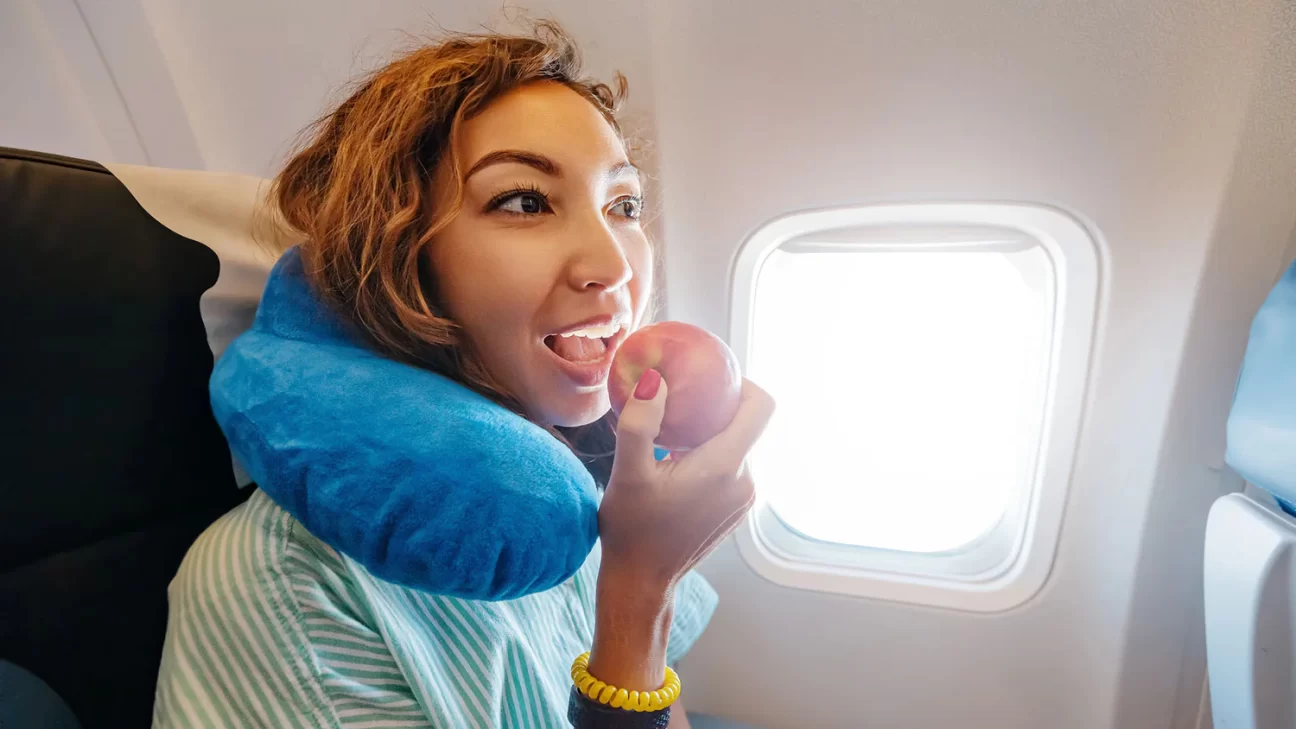
- Fiber-Rich Snacks: Nuts, seeds, apples, pears, and whole-grain crackers aid digestion.
- Hydrating Fruits and Veggies: Cucumbers, watermelon, oranges, and leafy greens prevent dehydration.
- Bone Broth or Soup: Easy to digest and soothing for the gut.
Foods to Avoid or Limit
- Processed Foods: Chips, fast food, and sugary snacks disrupt gut bacteria.
- Excess Caffeine and Alcohol: Both can cause dehydration and digestive upset.
- Unfamiliar Street Food: Risk of contamination can trigger traveler’s diarrhea.
- Heavy Dairy and Fried Foods: May cause discomfort, especially if lactose intolerant.
Staying Hydrated on the Go
- Carry a refillable water bottle; consider one with a built-in filter for international travel.
- Sip herbal teas like ginger or peppermint to aid digestion.
- Eat water-rich fruits and vegetables.
- Limit coffee and alcohol intake.
Managing Jet Lag and Time Zone Changes
- Sync your meals with local time as soon as possible.
- Get plenty of natural sunlight to reset your internal clock.
- Avoid heavy meals before bedtime.
- Incorporate gentle movement like stretching or walking to stimulate digestion.
Beating Traveler’s Constipation
- Maintaining fiber intake with snacks like almonds, flaxseeds, and dried fruit.
- Staying active with short walks or stretches.
- Drinking warm water in the morning to kickstart digestion.
- Responding promptly to nature’s call—don’t hold it in.
Dealing with Traveler’s Diarrhea
- Drinking bottled or filtered water.
- Avoiding raw or unpeeled fruits and vegetables in risky areas.
- Continuing probiotics to support gut balance.
- Rehydrating with electrolyte solutions if diarrhea occurs.
Keeping Stress Levels Low While Traveling
- Plan your itinerary to reduce last-minute stress.
- Practice mindfulness or deep breathing exercises.
- Prioritize quality sleep.
- Keep gut-friendly snacks handy to avoid hunger-induced irritability.
Natural Remedies for Common Gut Issues
- Ginger: Eases nausea and bloating.
- Peppermint Tea: Relaxes digestive muscles.
- Activated Charcoal: Absorbs toxins (use sparingly).
- Apple Cider Vinegar: Supports digestion when diluted in water.